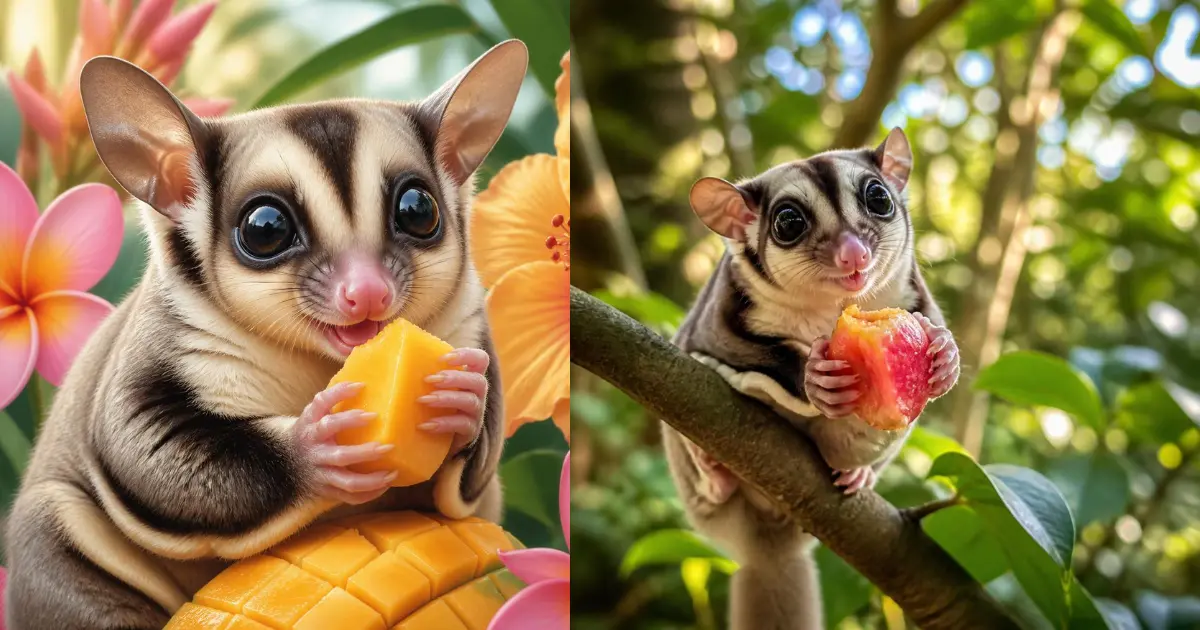
Treats are where most sugar glider diets quietly go wrong. Gliders love sweet, fatty foods, and they'll happily eat them instead of a balanced meal — a habit that leads straight to malnutrition and obesity (VCA Animal Hospitals). The good news? A short, safe treat list keeps snack time fun without wrecking the diet.
This guide covers the best treats to offer, how often to give them, the one nutritional rule every treat has to pass, and which foods to keep out of the cage entirely.
Key Takeaways
- Safest treats are gut-loaded insects, tiny portions of low-oxalate fruit, and a little cooked egg or lean protein.
- Offer insects roughly every other day and fruit only in small amounts (VCA Animal Hospitals).
- Every treat must keep the diet's calcium-to-phosphorus ratio in the safe 1:1–2:1 range.
- Never feed chocolate, caffeine, dairy, avocado, onion, garlic, or xylitol.
What are the best treats for sugar gliders?
The best sugar glider treats are ones that add protein or a little natural sweetness without unbalancing the diet: gut-loaded insects, small pieces of low-oxalate fruit, and occasional cooked egg or lean poultry. These mirror what gliders forage for in the wild — insects and nectar far more than fruit.
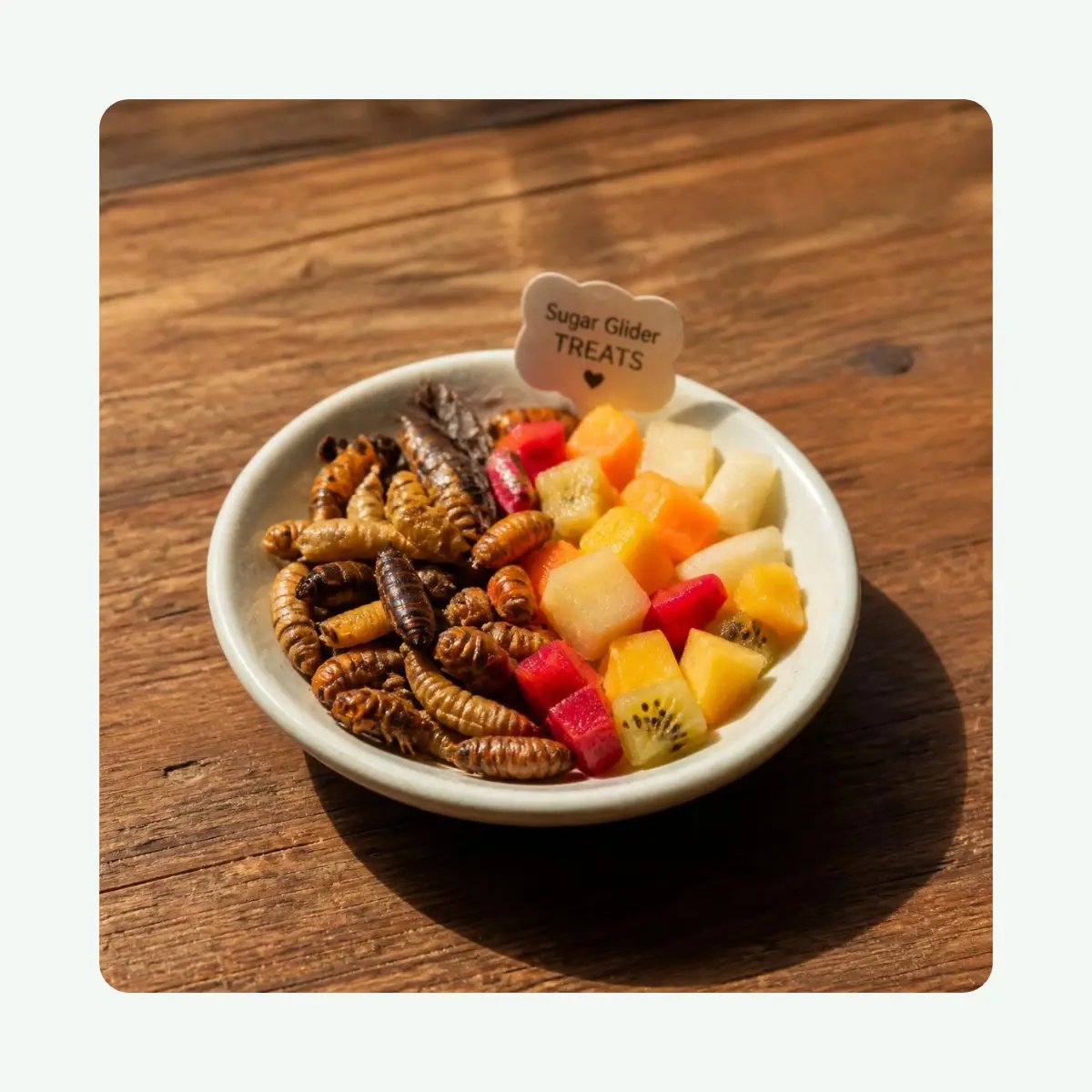
A safe rotating treat list looks like this:
- Live or gut-loaded insects — crickets, dubia roaches, and the occasional mealworm.
- Low-oxalate fruit, in tiny amounts — papaya, mango, blueberries, or a sliver of apple.
- Plain cooked protein — a pea-sized bit of boiled egg or unseasoned chicken.
- A few vegetables — snow peas, sweet potato, or squash.
Skip the flashy pet-store extras. Commercial "yogurt drops" and dried fruit are so sugary that gliders will hold out for them and ignore real food, so offer them very rarely if at all. Real, simple foods beat processed treats every time.
How often should you give treats?
Not as often as your glider would like. Insects are best offered roughly every other day, and fresh fruit should only ever be a small portion of daily intake because gliders eat it preferentially over balanced food (VCA Animal Hospitals). Treats are the extra on top of a solid base — never the base itself.
That base matters. A common vet-recommended feeding splits the daily diet into roughly equal thirds, and treats sit outside that structure:
Source: VCA Animal Hospitals, Sugar Gliders — Feeding (2026)
Because a glider's whole daily intake is only about 15–20% of its body weight, a couple of oversized treats can crowd out real nutrition fast. When snacks start replacing meals, weight and health drift — which is exactly why we recommend logging what you actually serve and tracking weight weekly to catch the drift early.
The one rule every treat has to pass
Here's the rule that separates a safe treat from a risky one: it can't tip the diet's calcium-to-phosphorus (Ca:P) ratio out of the safe 1:1–2:1 range. This is the single biggest reason "harmless" treats cause harm. When phosphorus dominates, the body pulls calcium from the bones, causing metabolic bone disease (MBD) — a painful, often fatal condition.
The catch is that the treats gliders love most are the worst offenders. Mealworms are calcium-poor and phosphorus-heavy, and most fruit is phosphorus-skewed too. That doesn't ban them — it just means you balance them. Gut-load feeder insects, dust them with a calcium supplement, and pair sweet treats with calcium-rich foods.
Rather than memorize numbers for every food, build the plate and check it. Our free Ca:P Ratio Calculator shows the ratio instantly before you serve, and Ca:P Ratio Explained walks through the science in depth.
Which treats should you avoid?
Some foods aren't "limit" foods — they're never foods. Chocolate and dairy should never be fed to a sugar glider (NC State Veterinary Hospital), and several common kitchen items are outright toxic. Learn this short list and the cage stays safe.
| Avoid | Why |
|---|---|
| Chocolate & caffeine | Theobromine and caffeine can cause tremors, seizures, and death |
| Dairy products | Gliders don't digest lactose; causes GI upset |
| Avocado | Contains persin, which can be fatal |
| Onion & garlic | Damage red blood cells, causing anemia |
| Xylitol (sugar-free gum/candy) | Can trigger blood-sugar crash and liver failure |
| High-oxalate produce (spinach, rhubarb, berries) | Block calcium absorption (NC State) |
| Canned/sugary/processed "treats" | Excess sodium, preservatives, and sugar |
When in doubt, leave it out — and if your glider does get into something on this list, call an exotic vet right away. A quick call beats a guess every time.
Frequently Asked Questions
Can sugar gliders eat fruit as a treat?
Yes, but only in tiny portions. Sugar gliders eat sweet foods to the exclusion of a balanced diet, so fruit should be a small part of daily intake (VCA Animal Hospitals). Pick low-oxalate options like papaya, mango, and blueberries, and balance the phosphorus with calcium.
Are mealworms safe treats for sugar gliders?
In moderation, yes. Insects are healthy protein, but mealworms are calcium-poor and phosphorus-heavy, so offer them sparingly and gut-load or dust them with calcium. Many exotic vets suggest insects roughly every other day (VCA Animal Hospitals), not at every meal.
What treats are toxic to sugar gliders?
Never feed chocolate, caffeine, or dairy (NC State Veterinary Hospital), and avoid avocado, onion, garlic, and the sweetener xylitol. High-oxalate produce like spinach, rhubarb, and berries blocks calcium absorption and should be limited or skipped entirely.
How many treats can a sugar glider have per day?
Keep treats a small fraction of the diet. Because gliders prefer sweets and can eat them to the point of malnutrition and obesity (VCA Animal Hospitals), a balanced staple diet always comes first — treats sit on top of it, not inside it.
Build a safe treat plate in seconds
Treats should make your glider's day, not shorten its life. The simplest way to stay safe is to check the balance before you serve: assemble the plate in our free Ca:P Ratio Calculator and see the calcium-to-phosphorus ratio instantly, treats included.
Where to go next
- Sugar Glider Diet: The Complete Guide — the full feeding plan treats sit on top of.
- Ca:P Ratio Explained — why the calcium rule matters.
- Sugar Glider Weight Tracking — catch treat-driven weight gain early.
Sources
- VCA Animal Hospitals, "Sugar Gliders — Feeding," retrieved 2026-07-18, https://vcahospitals.com/know-your-pet/sugar-gliders-feeding
- NC State Veterinary Hospital, "Caring for Your Pet Sugar Glider," retrieved 2026-07-18, https://hospital.cvm.ncsu.edu/services/small-animals/nutrition/caring-for-your-pet-sugar-glider/
This article is general husbandry guidance, not veterinary advice. For any medical concern, consult an exotic-animal veterinarian.
Track your glider’s diet, weight & bonding
GliderCare turns the guidance in this article into daily practice — Ca:P safety guardrails, weight trend alerts, and a bonding journal, free for your first glider.